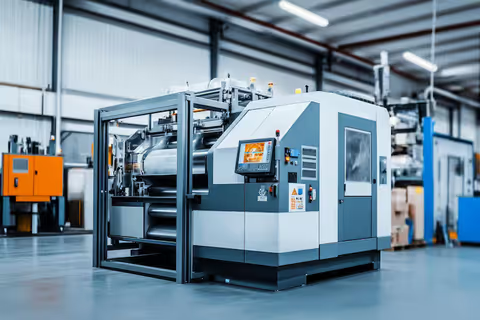
Get to Know Industrial Blower Manufacturers and Their Key Insights
Industrial blowers play an essential role in keeping factories, processing units, warehouses, and infrastructure systems running smoothly.
Whether it is moving air, removing fumes, controlling temperature, or supporting industrial processes, blowers are widely used across manufacturing, mining, power generation, HVAC, and food processing industries. Yet many users only encounter the final equipment and rarely get a clear look at the companies behind these machines or the range of solutions they offer.
This guide helps you understand industrial blower manufacturers, what they produce, how offerings vary, and what to look for while choosing the right equipment. The goal is to provide clear, dependable information that helps decision-makers, engineers, and general readers make informed choices.
Introduction: Why Industrial Blower Manufacturers Matter
Industrial blowers are not simple fans. They are engineered systems designed to handle heavy loads, support continuous operations, maintain airflow quality, and tolerate diverse environmental conditions. As industries become more complex, the role of specialized manufacturers has grown significantly.
Understanding manufacturers and their offerings matters because:
-
Industrial blowers vary widely in performance, design, and durability.
-
Choosing the wrong blower can lead to operational inefficiency, higher costs, or equipment failure.
-
Manufacturers differ in expertise, certifications, service networks, and customization capabilities.
-
Technological advancements have introduced new options in energy efficiency, control systems, and materials.
Learning what manufacturers provide and how to evaluate them helps businesses and users avoid common issues and make smarter investments.
Benefits of Working With Established Industrial Blower Manufacturers
Choosing a reliable manufacturer can significantly impact long-term performance and maintenance needs. Key benefits include:
1. Engineering Expertise
Experienced manufacturers design blowers that meet industry standards while offering consistent airflow, pressure stability, and long service life.
2. Wide Range of Configurations
Manufacturers offer multiple designs to match different industrial needs, such as high-pressure applications, corrosive environments, or energy-saving systems.
3. Availability of Spare Parts and Support
Access to maintenance support, documentation, and spare parts ensures reduced downtime.
4. Customization Options
Many manufacturers build systems tailored to specific temperature ranges, materials, or operational conditions.
5. Compliance with Safety and Environmental Standards
Reliable companies adhere to global certifications such as ISO, AMCA standards, CE compliance, and others depending on regions and industries.
Limitations to Be Aware Of
While industrial blower manufacturers offer several advantages, there are some limitations:
-
Lead times can be long for custom-built blowers.
-
Upfront costs may be higher compared to generic or non-certified suppliers.
-
Complex installations may require professional setup or alignment.
-
Maintenance schedules vary by model and may require specialized technicians.
-
Energy consumption can be high in older or less efficient blower models.
Understanding these limitations helps users plan better and avoid unexpected operational challenges.
Types of Industrial Blowers Offered by Manufacturers
Industrial blower manufacturers typically provide several categories of blowers. Each type has advantages for specific use cases.
1. Centrifugal Blowers
Features a rotating impeller that moves air outward at high speed.
Common uses include dust collection, ventilation, cooling, and process applications.
Strengths: High pressure, stable airflow
Limitations: Larger size, more noise
2. Axial Blowers
Moves air parallel to the shaft, similar to a large industrial fan.
Strengths: High airflow volume, smaller footprint
Limitations: Lower pressure capabilities
3. Positive Displacement Blowers
Designed to move a fixed volume of air, regardless of pressure changes.
Strengths: Precision airflow, ideal for pneumatic conveying
Limitations: Higher mechanical complexity
4. Regenerative Blowers
Also known as side-channel blowers, commonly used for vacuum generation and light pressure applications.
Strengths: Oil-free operation, low maintenance
Limitations: Limited pressure range
5. High-Temperature Blowers
Designed with heat-resistant materials for furnace, kiln, and combustion support.
6. Portable and Compact Blowers
Used in confined spaces, ventilation tasks, and temporary industrial setups.
Comparison Table: Types of Industrial Blowers
| Blower Type | Airflow | Pressure | Best Used For | Limitations |
|---|---|---|---|---|
| Centrifugal | Medium | High | Dust collection, cooling, process air | Larger size |
| Axial | High | Low | Ventilation, HVAC, cooling systems | Low pressure |
| Positive Displacement | Controlled | Stable | Conveying, aeration | Higher maintenance |
| Regenerative | Moderate | Low–Medium | Vacuum, small systems | Limited pressure |
| High-Temperature | Variable | Medium–High | Furnaces, heating | Specialized materials |
| Portable | Variable | Low | Temporary setups | Not suitable for heavy workloads |
Latest Trends and Innovations in Industrial Blower Manufacturing
The field is evolving as industries demand safer, more efficient, and environmentally friendly equipment. Some recent trends include:
1. Energy-Efficient Motors
Manufacturers are increasingly offering IE3 and IE4 motors to reduce energy consumption.
2. Variable Frequency Drives (VFDs)
VFD integration allows precise control of airflow and reduces power usage during partial load.
3. Noise Reduction Technologies
Advanced blade design, insulation, and optimized housings help reduce operational noise.
4. Smart Monitoring and IoT Integration
Some modern blowers include sensors for temperature, vibration, and airflow, enabling predictive maintenance.
5. Corrosion-Resistant and Composite Materials
Manufacturers are using specialized coatings and lightweight materials to extend lifespan in harsh environments.
6. Modular Blower Designs
These make installation easier and reduce downtime during repairs.
Key Features to Consider When Evaluating Blower Manufacturers
When choosing a manufacturer or specific blower model, consider the following factors:
1. Airflow and Pressure Requirements
Match the blower’s specifications with the actual operating needs of your application.
2. Material and Build Quality
Steel, aluminum, coated metals, or reinforced composites each provide different benefits depending on the environment.
3. Motor Efficiency
Higher efficiency motors reduce operational costs.
4. Noise Levels
Important for indoor or worker-exposed environments.
5. Maintenance Accessibility
Check whether the design allows easy cleaning, lubrication, or part replacement.
6. Certifications
Look for ISO 9001, AMCA certification, CE marking, or other industry-specific approvals.
7. Availability of Support
Manufacturers with good documentation, service networks, and spare parts reduce long-term costs.
Top Industrial Blower Manufacturers and Solutions
Below is a non-promotional, factual list of widely recognized manufacturers. These companies are publicly known in industrial ventilation and blower engineering.
1. Howden
Global industrial air and gas handling company offering centrifugal and axial blowers.
Website: https://www.howden.com
2. Gardner Denver (Now Part of Ingersoll Rand)
Provides positive displacement blowers and compressors for multiple industries.
Website: https://www.irco.com
3. Tuthill Vacuum and Blower Systems
Known for high-performance rotary blowers.
Website: https://www.tuthill.com
4. Chicago Blower Corporation
Provides centrifugal and axial fans for heavy-duty industrial applications.
Website: https://www.chicagoblower.com
5. Twin City Fan & Blower
Offers a wide range of industrial fans and blowers with specialty engineering capabilities.
Website: https://www.tcf.com
6. Air Control Industries
Specializes in air movement equipment for manufacturing and industrial processes.
Website: https://www.aircontrolindustries.com
These companies differ in focus areas, product ranges, and industry expertise. Always evaluate based on your specific needs rather than general reputation.
Comparison Table: Top Manufacturers and Key Strengths
| Manufacturer | Known For | Product Range | Global Presence | Suitable For |
|---|---|---|---|---|
| Howden | High-engineering solutions | Axial, centrifugal | Strong global | Heavy industries |
| Ingersoll Rand (Gardner Denver) | Positive displacement | PD blowers, compressors | Global | Process industries |
| Tuthill | Rotary blowers | Vacuum, PD systems | Moderate | Precision airflow |
| Chicago Blower | Heavy-duty fans | Centrifugal, axial | Strong North America | Large facilities |
| Twin City Fan | Broad catalog | Industrial fans, HVAC blowers | Global | Multiple applications |
| ACI | Specialized systems | Drying, ventilation | Global | Manufacturing |
How to Choose the Right Industrial Blower Manufacturer
Selecting the right manufacturer involves evaluating your technical needs alongside supplier capabilities. Use this checklist to guide your decision:
Checklist for Choosing a Blower Manufacturer
-
Does the manufacturer offer the blower type required for your process?
-
Are airflow, pressure, and temperature ratings suitable?
-
Are materials compatible with the environment (corrosive, dusty, high-heat)?
-
Does the manufacturer provide documentation, support, and warranty?
-
Are custom configurations available if necessary?
-
Are spare parts easy to obtain?
-
Does the company comply with industry safety standards?
-
Are installation and operational guidelines clear?
Taking a structured approach ensures that your final choice aligns with both operational goals and long-term maintenance expectations.
Tips for Best Use and Maintenance of Industrial Blowers
Proper use and maintenance extend the life of industrial blowers and ensure consistent performance.
1. Follow Manufacturer Guidelines
Every blower has detailed specifications regarding speed, temperature limits, lubrication, and cleaning.
2. Schedule Regular Inspections
Check for vibration, noise, bearing temperature, and airflow restrictions.
3. Keep Air Passages Clean
Dust buildup can reduce performance and strain the motor.
4. Maintain Drive Belts and Motors
Ensure correct belt tension and motor alignment for smooth operation.
5. Monitor Energy Usage
Sudden spikes may indicate blockages, worn parts, or incorrect settings.
6. Use Correct Filters
If filtering is required, choose the right type and replace it on schedule.
7. Operate Within Rated Limits
Overloading the blower may lead to overheating or premature wear.
Frequently Asked Questions (FAQs)
What is the difference between an industrial fan and an industrial blower?
Fans move large volumes of air at low pressure, while blowers generally handle higher pressure applications.
How long does an industrial blower last?
With proper maintenance, they may last several years. Lifespan varies based on use, design, and operating conditions.
Do industrial blowers require specialized installation?
Some blower types need precise alignment or piping configurations. Always refer to manufacturer instructions.
What factors impact blower efficiency?
Motor type, blade design, cleanliness, and load conditions all influence efficiency.
Can blowers be used for high-temperature environments?
Yes. Manufacturers offer specialized high-temperature blowers designed with heat-resistant materials.
How do I know which blower size is appropriate?
Calculation of airflow (CFM), static pressure, and environment conditions determines the right size. Manufacturers often provide selection charts or tools.
Are energy-efficient blowers worth it?
Energy-efficient motors and VFDs can significantly reduce long-term power costs, especially in continuous operations.
Conclusion: Making an Informed Decision
Industrial blowers are a crucial part of many industrial processes, and understanding manufacturers, key features, and product categories helps users make informed decisions. By evaluating performance, materials, certifications, and long-term support, you can choose equipment that aligns with your operational needs. The right manufacturer offers more than a product; they provide reliability, consistency, and engineering expertise that supports your processes over time.
Using the checklists, tables, and insights in this guide, readers can approach blower selection with greater confidence and clarity. The goal is not to find the biggest brand, but to find the manufacturer whose offerings match the specific demands of the application.

Related Post...

Get to Know Industrial Blower Manufacturers and Their Key Insights
Updated: October 10, 2026
Read More
Understanding Guide For EPS Recycling Machines and Foam Recycling Systems
Updated: October 09, 2026
Read More